How Animation Brings Coiled Tubing Simulator to Life A Showcase
There is a moment in every coiled tubing training course when the room goes quiet. It happens when the animation begins, and the trainees watch the string run into the well, see the forces building along its length, and suddenly understand what the numbers on the instructor’s screen actually mean. That moment is the reason ESIMTECH builds animation into its coiled tubing simulator program. The simulator teaches by doing; the animation teaches by showing, and together they close the gap between abstraction and understanding faster than either could alone. This showcase walks through how animation brings the coiled tubing simulator to life, from the physics on screen to the visual details that make procedures memorable.
The starting point of the animation is the physics that the simulator computes. The coiled tubing simulator models the forces acting on the string in real time: tension at the injector, compression and friction along the wellbore, and the buckling that occurs when loads exceed limits. The animation makes these forces visible. Instead of a trainee reading a weight value and trying to imagine what it means, the animation shows the string bending, the friction zones highlighting along the wellbore, and the load path shifting as the operation proceeds. When trainees can see the physics, they stop memorizing numbers and start understanding behavior.
Visualizing the Invisible: Forces and Fluids
The fluid side of the simulation gets the same treatment. Circulation is the heartbeat of coiled tubing operations, and the animation renders the flow: the pump pushing fluid down the string, the returns carrying cuttings up the annulus, the pressure losses at each restriction. Trainees watch the balance between pump rate and returns, and they see what happens when that balance breaks, the pressure climbing, the returns thinning, the warning signs that a real operator must read from the instrumentation. The animation translates the abstract pressure curve into a visible process, and trainees who have seen it once never forget what the curve means.
The visual fidelity extends to the equipment itself. The animation models the reel, the gooseneck, the injector with its gripping chains, the well control stack, and the flow path through the surface equipment. Every component moves the way the real equipment moves, which matters more than it sounds: trainees build expectations about timing and sequence from what they see, and if the animation’s equipment behavior does not match the real machine, those expectations become errors. An animation that looks right but behaves wrong trains people to expect the wrong thing, which is why the animation in a serious simulator program is built from the same engineering reference as the simulator itself.
From Storyboard to Screen: The Craft Behind the Images
The production process behind the animation follows the same engineering-first discipline that governs the simulator. It begins with a technical brief drawn from equipment manuals and input from coiled tubing engineers, defining the exact sequence of operations and the physics that must be represented. Storyboards map the shots so that each one answers a question a trainee might ask: what happens at the injector, what happens at the reel, what does the wellbore look like from inside. Modeling builds the equipment to scale, and the animation pass respects the real constraints of motion, the speed of the injector, the response of the pressure gauges, the way the string reacts to the operator’s inputs.
The review cycle is where the animation earns its credibility. Every sequence is checked by engineers against the operational procedure, and corrections are made until the motion matches field practice. The result is a visual asset that can be used for pre-briefs, e-learning, exhibition demonstrations, and tender documentation, always showing the same procedure the simulator teaches. This consistency between what trainees watch and what they practice is the core of the watch, practice, debrief model that modern intervention training is built on.
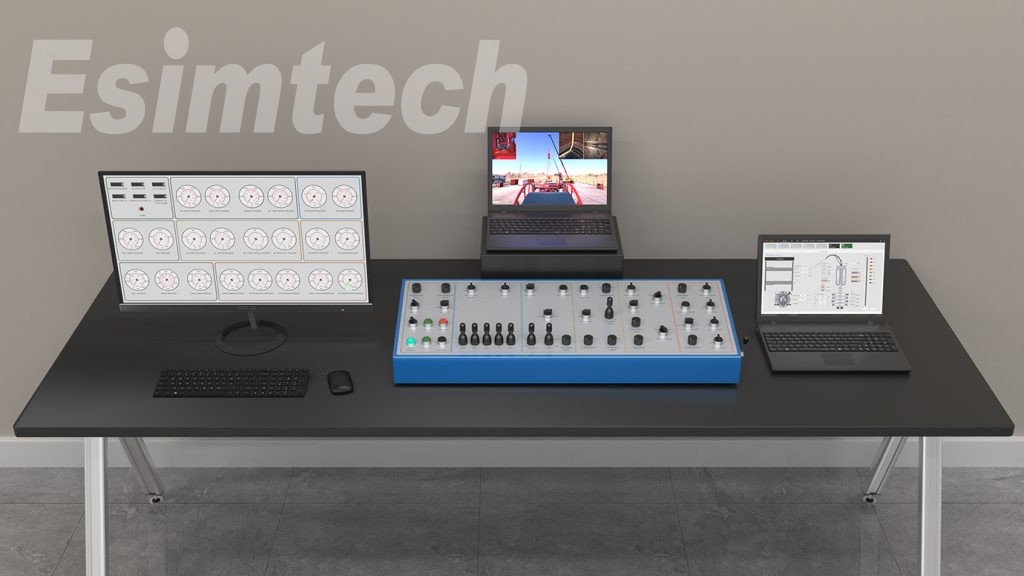
The image below shows a frame from the coiled tubing animation library, illustrating the operator environment and the wellbore visualization that trainees see.
How the Showcase Works in Training
In practice, the animation integrates into the curriculum at three points. The first is the pre-brief: before a coiled tubing operator training simulator session, trainees watch the animation of the procedure they are about to practice, building the mental model that makes the practice efficient. The second is the debrief: after a session, the instructor plays the animation of the ideal sequence alongside the recording of the trainee’s own performance, and the difference becomes visible, the exact point where the trainee’s decision diverged from the correct one. The third is assessment preparation: trainees review the animations of the procedures they will be tested on, refreshing the sequence knowledge that the assessment assumes.
The same animation assets support a portable coiled tubing simulator deployment seamlessly. Because the animation is software-based, it travels with the simulator, to bases, to camps, and to rig sites, and the watch, practice, debrief cycle works in a field setting exactly as it works in a classroom. This portability of the visual layer is one of the quiet advantages of a fully integrated training system: the animation is not a museum piece in the head office, it is part of the kit that goes where the work is.
What the Showcase Reveals About Modern Training
Looking at the full showcase, the pattern is clear: the best training programs do not choose between animation and simulation, they combine them. The coiled tubing simulator provides the experience, the consequences, and the assessment evidence; the animation provides the understanding, the shared visual language, and the mental rehearsal. Trainees who experience both arrive at their first real job with a complete picture, they know what the procedure looks like, what it feels like, and what it means when something goes wrong.
For training organizations evaluating their options, the animation layer deserves the same scrutiny as the simulator itself. Ask to see the actual sequences, check that the equipment behavior matches the real machines, and verify that the animation is consistent with the simulator’s logic. The suppliers who build both from the same engineering foundation, as ESIMTECH does, deliver a program that is more than the sum of its parts. The coiled tubing operator training simulator teaches the hands; the animation teaches the eyes, and together they teach the judgment that makes an operator trustworthy on a real job.