Seven Signals Your Logistics Management System Is Ready for a Smarter WMS A Comparative Insight
A Quiet Shift on the Dock: Why Compare Now
Here’s the plain truth: the floor tells you the story long before the reports do. Your logistics management system keeps trucks moving and orders flowing, but the cracks show at peak. When pallets stack up, pick times creep, and last-mile queries spike, it’s time to weigh the best warehouse management system against what you have today. In one Edinburgh site last quarter, dock-to-stock time rose 14% while volume rose only 5%—aye, a wee mismatch. RFID reads dropped in high-metal zones, and edge computing nodes couldn’t sync in time, so the team worked blind for 37 minutes. Does that feel familiar, right enough?
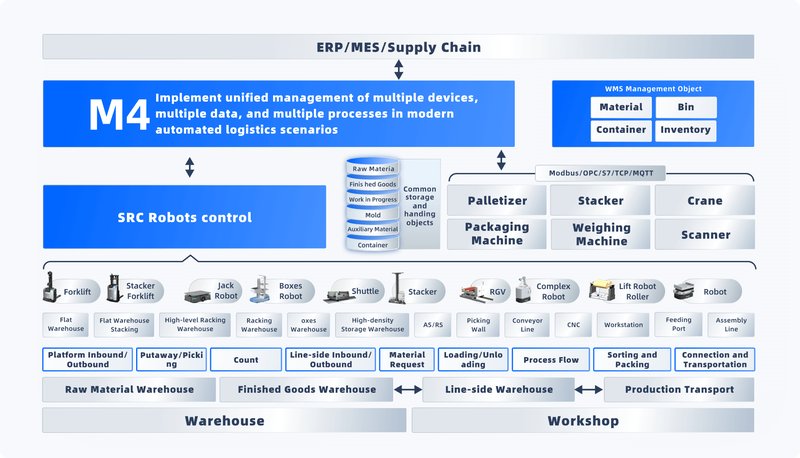
Now, think on this scenario: carriers arrive early, inventory is late to post, and your OMS says “allocated,” yet the bins are empty. That’s not bad luck; it’s a signal. If your WMS can’t map constraints to reality—latency budget, throughput, AMR handoffs—then every peak hour becomes a gamble. The question is simple: will the next hour cost you margin or earn you trust? Let’s step through the signs—and what a better path could look like—before the next cycle lands.

The Deeper Cost: Hidden Pain Points You Can’t See on a Dashboard
What actually hurts?
Technical view, short and sharp. Most traditional setups miss three quiet pain points. First, visibility gaps masquerade as “variance.” When barcode exceptions roll in and the API retries, your latency budget gets burned; workers stand, waiting for a green light. Second, rules engines grow brittle. You tweak slotting and wave picking for a special, but the ERP middleware does not pass the new flags at speed, so replenishment lags by hours. Third, robotics add-ons bolt on, not blend in. AMR fleets queue at choke points because task orchestration lacks live constraints. Look, it’s simpler than you think: without event-driven logic and resource-aware routing, small time losses compound. The result—funny how that works, right?—is rising overtime, noisy inventory, and a creeping service dip that no KPI flags until returns spike.
Comparative Path Forward: Principles That Make a Smarter WMS Different
What’s Next
Move from rule stacks to live signals. A modern engine uses streaming events, not nightly batches. It computes decisions near the action (edge computing nodes at the dock), then resolves conflicts in the core. That cuts decision hops, keeps the latency budget in check, and feeds workers clean prompts. The best warehouse management system applies resource-aware scheduling that respects aisle traffic, lift battery state, and task durations—then re-optimises when reality shifts. It also treats data as a contract: stable APIs, versioned schemas, and predictable rate limiting so ERP, OMS, and robotics can agree. Add digital twins for slotting trials and you test changes before they hit steel. Small principle, big result—fewer surprises, steadier flow.
What does this mean in practice? Fewer touches, faster cycle counts, and calmer peaks. Compared with legacy flows, event-driven orchestration trims dock-to-stock minutes, while AMR tasking syncs with human picks instead of colliding with them. Summing up: we saw the unseen costs (visibility gaps, brittle rules, bolt-on bots) and shifted to principles that turn chaos into cues. To choose well, use three checks. First, decision clarity: can you trace each putaway or pick to its live inputs? Second, resilience under load: do exceptions stay local—or ripple through the yard? Third, pace of change: can you re-slot, re-route, and simulate without vendor tickets? If you can say “yes” to those three, you’re close to the best fit. And if comparisons help—because they do—keep your lens on outcomes, not demos. For perspective grounded in real deployments, see SEER Robotics.